Do Solo Ads Still Work in 2026?
Every year since I started selling solo ads in 2012, someone has declared them dead. Every year my list keeps producing clicks, my buyers keep posting delivery screenshots, and the question keeps getting searched. The honest answer is not a clean yes or no — it's yes, under three conditions, and I'd rather show you the conditions and the data than sell you a slogan.
Solo ads still work in 2026 for one specific job: building an email list in niches that live in inboxes — make-money, biz-opp, personal development, health. They need a capture page, a follow-up sequence, and a documented seller. Without any one of those three, save your money.
See the documented numbers →What actually changed since 2012 — and what didn't
Watching this channel from the seller's side for fourteen years gives you a different change-log than the blogs have:
- Filtering got real. In 2012 a click was a click. Today every serious seller runs bot filtering and tier checks, and marketplaces filter on top of that. The junk still exists — it just clusters at the bottom of the price range.
- Inbox providers raised the bar. The 2024 bulk-sender rules (authentication, one-click unsubscribe, spam-rate ceilings) pushed hobbyist senders out. A list that survives daily mailing under those rules is a healthier product than the average 2012 list ever was.
- What didn't change: the economics. Email clicks still cost a fraction of what search or social ads charge in these niches, and a captured subscriber still keeps paying attention long after the click.
What the delivery data shows
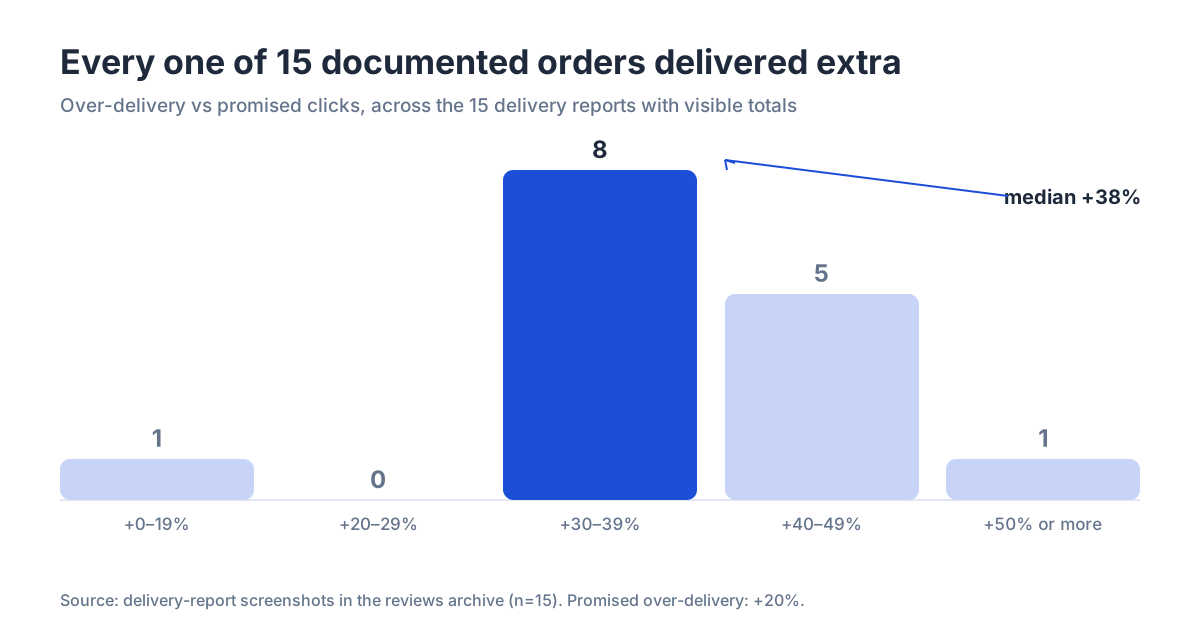
I publish my numbers, which is rare enough in this market to be a differentiator by itself. Across the delivery reports in my reviews archive with visible totals, every one of 15 orders delivered more clicks than promised — the median came in 38% over. Buyers who stated their results in written reviews report opt-in rates from 17% to 83%, with the median at 43%. The spread is the honest part: the same traffic opts in at 17% on a weak page and 83% on a strong one.
When solo ads work
- You capture emails first. The click's job is to become a subscriber. Buyers in my archive who measured opt-ins first and let the follow-up sequence sell are the ones reporting 3, 4 and 11 sales.
- Your offer lives in the inbox niches. Make-money, biz-opp, personal development, health. These audiences read email daily; a local plumber's audience does not.
- You buy from documented sellers. Delivery reports, named reviews, tier data. The seller who shows their numbers has numbers worth showing.
When they fail — and when I tell buyers not to order
I turn away orders that are set up to lose, because refund conversations cost more than the sale is worth. The recurring failure patterns:
- Direct-linking a cold offer. Sending paid clicks straight to a checkout or an affiliate link skips the capture step; the visit evaporates and nothing compounds.
- E-commerce and local businesses. The lists in this market are marketing-interest lists. Physical products and local services belong on other channels.
- Day-one profit expectations. A solo ad campaign is list-building with a sales tail, not a slot machine. If breaking even in week one is the requirement, this is the wrong buy.
The break-even math on a real order
Take my 200-click package at $55. Documented median over-delivery would land about 276 clicks. At the 43% median opt-in, that's roughly 118 subscribers — about $0.47 each. If your follow-up sequence converts 2% of those subscribers to a $47 front-end inside a month, that's $94 back — break-even plus a list of 118 people you keep mailing. That last clause is the entire business model.
Solo ads vs paid ads in 2026
| Channel | What you pay for | Where it wins |
|---|---|---|
| Solo ads | Email clicks, $0.23–0.95 | List-building in inbox niches, fast delivery |
| Meta / TikTok ads | Impressions + algorithm learning | Broad consumer offers, visual products |
| Google ads | Search intent, $1.50+ per click | High-value intent keywords |
The honest comparison: paid ads scale further; solo ads start faster and cheaper for the specific job of filling an email list in these niches. They are a tool with a defined shape, not a universal answer — which, fourteen years in, is exactly why they still work.
Frequently asked questions
Are solo ads still effective in 2026?
Yes, for list-building in email-native niches (make-money, biz-opp, personal development, health) with a capture page and follow-up sequence. Documented orders in my archive still deliver above promised volume, with a 43% median buyer-reported opt-in rate.
Are solo ads worth the money?
At $0.23–0.28 per click and median 43% opt-in, a subscriber costs roughly $0.53–0.65. If your follow-up sequence can turn 118 subscribers into two front-end sales, a $55 order breaks even and the list remains yours.
How do I avoid fake or bot solo ad traffic?
Buy from sellers who publish delivery reports and named reviews, track uniques with your own link, and treat prices far below the $0.23–0.95 documented range as the warning sign they are.
How many clicks should a first test be?
100–200 clicks — enough to read your opt-in rate against the 17–83% documented range without meaningful risk. My smallest package is 100 clicks for $28.